 $6.99
New
$6.99
New
Home › Templates › E-commerce › Storefront
E-commerce dashboard template
Storefront E-commerce Dashboard Template
Storefront is a single-file HTML dashboard template that tracks revenue, orders, discounts, fulfillment, and inventory for an online store.
Storefront is an e-commerce sales dashboard template for an online store. It renders as the store manager's home screen: revenue and profit KPIs, an order status distribution, best sellers with stock health, a fulfillment kanban, and a reorder queue, all on one light page styled in the Merchant Blue theme. The file is self-contained HTML priced at $6.99, and it opens in any browser with no build step.
Storefront leads its sales section with trailing 12-month revenue of $869,400, up 18.2 percent against the previous 12 months, with May marked as the best month at $92.6K. It charts monthly revenue against the year before, breaks down category mix year to date, and flags a discounted share of 22 percent and a wholesale share of 14 percent. A discount codes table lists live campaigns with uses, revenue, amount given away, and net effect. The orders section is a kanban where cards advance from New to Picking to Shipped to Delivered, with 18 orders in flight, an oldest awaiting-pick age of 38 minutes, and an average click-to-ship of 7.2 hours, down 1.1 hours week over week. Inventory keeps a stock ledger sorted by days of stock remaining and a reorder queue ordered by lowest cover first. A command palette on Ctrl K and a New order action round out the app shell.
What is inside Storefront
- Trailing 12-month revenue of $869,400 with a plus 18.2 percent comparison against the previous 12 months
- Monthly revenue bar chart comparing the current 12 months against the year before
- Discounted share and wholesale share callouts with point changes against last year
- Discount codes table with uses, revenue, amount given away, and net effect per campaign
- Order status distribution panel for current orders
- Fulfillment kanban advancing cards from New to Picking to Shipped to Delivered with oldest-order age
- Average click-to-ship of 7.2 hours with a week-over-week delta
- Best sellers table with price, units sold, stock, and status per product
- Stock ledger sorted by days of stock remaining plus a reorder queue ordered by lowest cover first
- Command palette on Ctrl K and a New order quick action in the app shell
Who Storefront is for
Storefront serves store owners and e-commerce managers who check revenue, profit, and order flow every morning before opening the admin panels of four different tools.
Storefront is built for marketers who watch discount code performance and the discounted share of revenue before margin erodes.
Storefront fits fulfilment leads who work the order kanban and track click-to-ship time against last week.
Storefront supports inventory buyers who read the stock ledger by days remaining and work the reorder queue from the lowest cover up.
When to reach for it
Storefront fits a store where sales reporting means exporting the platform's orders CSV into a spreadsheet every week. The template puts trailing revenue, category mix, and discount cost on one page that is always laid out the same way.
Storefront fits stores where fulfilment and commercial reporting live apart. The kanban ties order aging and click-to-ship time to the same screen as revenue, so a slow pack station shows up next to the number it affects.
Storefront replaces the monthly slide deck. The trailing-12-months chart, best month callout, and share metrics are already arranged the way a review meeting asks for them.
Storefront also works as a front end for a real store. The data constants inside the file can be fed by a Shopify or WooCommerce export with a small script.
Specifications
| Format | Single self-contained HTML file; zero dependencies, no build step |
|---|---|
| Theme | Merchant Blue |
| Mood | Light |
| Category | E-commerce |
| Price | $6.99, one-time |
Frequently asked questions
What does the Storefront dashboard template show?
The Storefront dashboard template shows the commercial health of an online store: trailing 12-month revenue, monthly comparison against last year, category mix, discount code economics, a fulfillment kanban with click-to-ship time, and a stock ledger with a reorder queue. It costs $6.99 as a single HTML file.
Can I connect Storefront to Shopify or WooCommerce?
Yes, you can connect Storefront to Shopify or WooCommerce with a contained scripting job. The shipped file renders sample data stored inside the page, and replacing those constants with a fetch to your platform's API or a scheduled JSON export leaves the layout, charts, and kanban unchanged.
How does Storefront differ from the Parcel template?
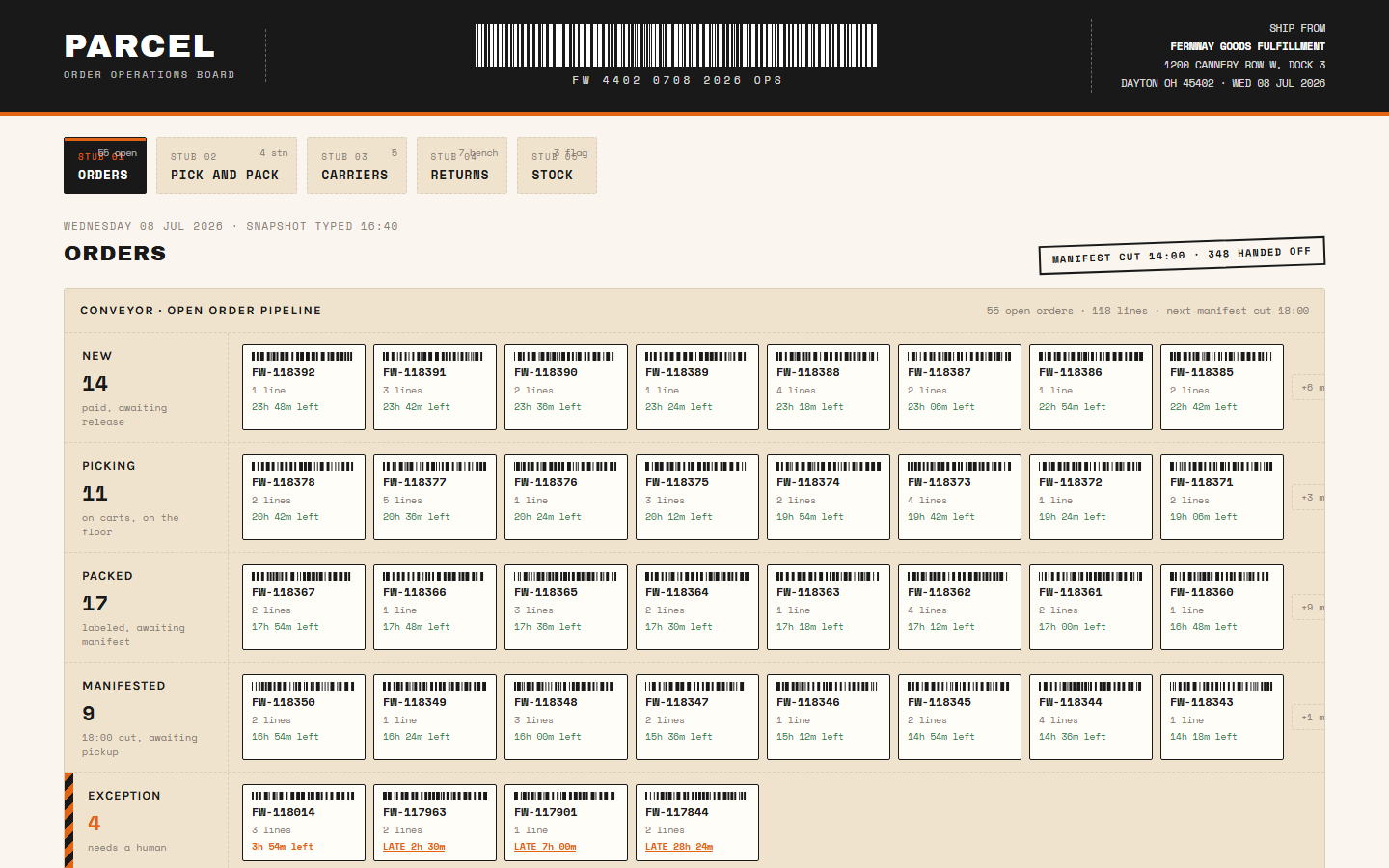
Storefront covers the selling side: revenue, profit, discounts, and best sellers. Parcel covers the warehouse side: pick rates, pack throughput, carriers, returns, and stock cover. Both sit in the e-commerce category and share the same single-file format.
Does the fulfillment kanban actually move orders?
Yes, the fulfillment kanban moves orders in the shipped template: clicking an order card advances it through New, Picking, Shipped, and Delivered states in the browser. Persisting those moves to a real order system requires wiring the click handler to your backend or platform API.