Home › Templates › Health
Category
Healthcare Dashboard Templates
A healthcare dashboard template is a single HTML file that shows whether the facility is coping right now. Healthcare operations metrics include bed state, door-to-provider time, theatre utilization, nurse-to-patient ratios, and discharge blockers. This page lists 2 healthcare templates, each a self-contained file at $6.99 with a live preview.
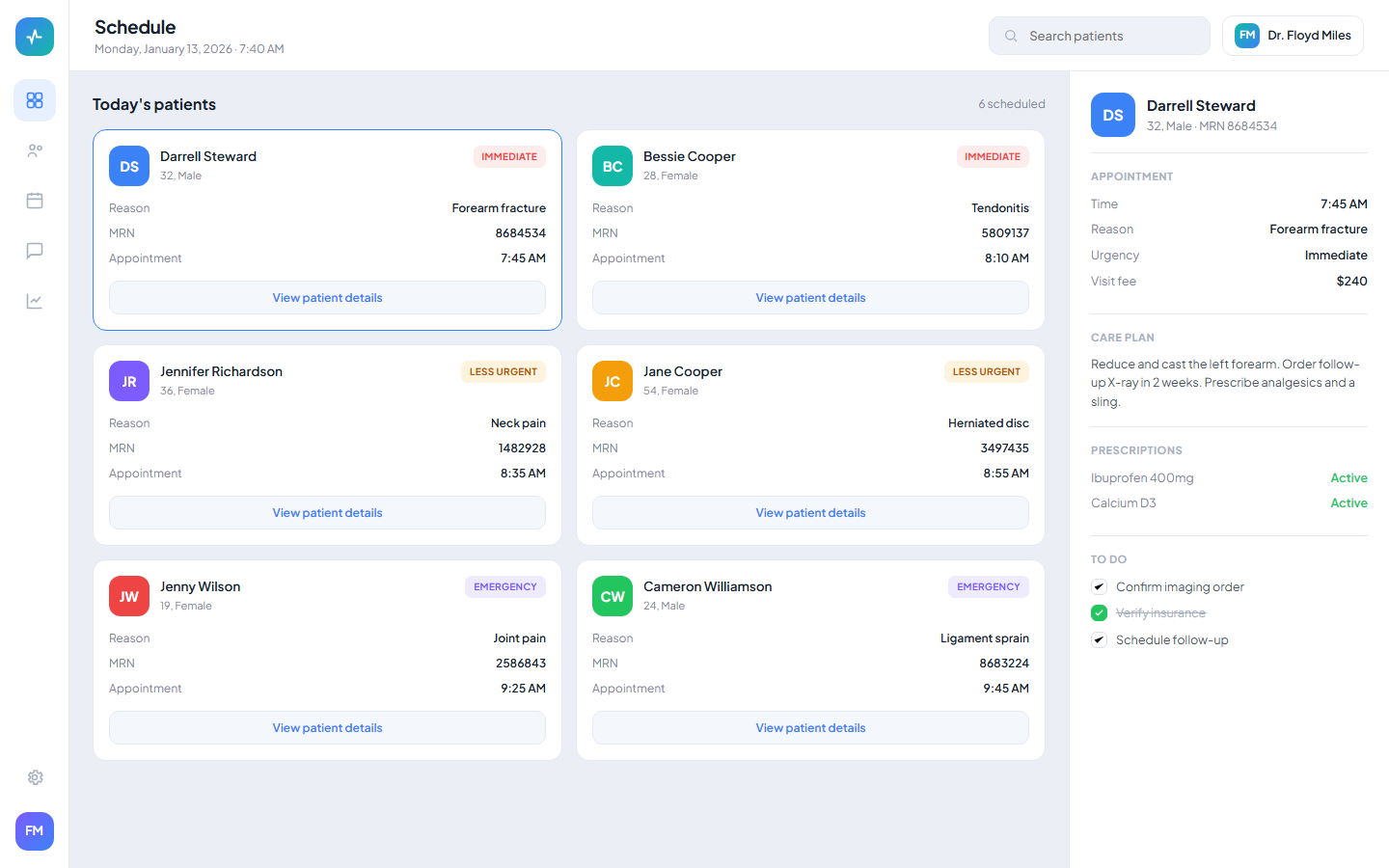
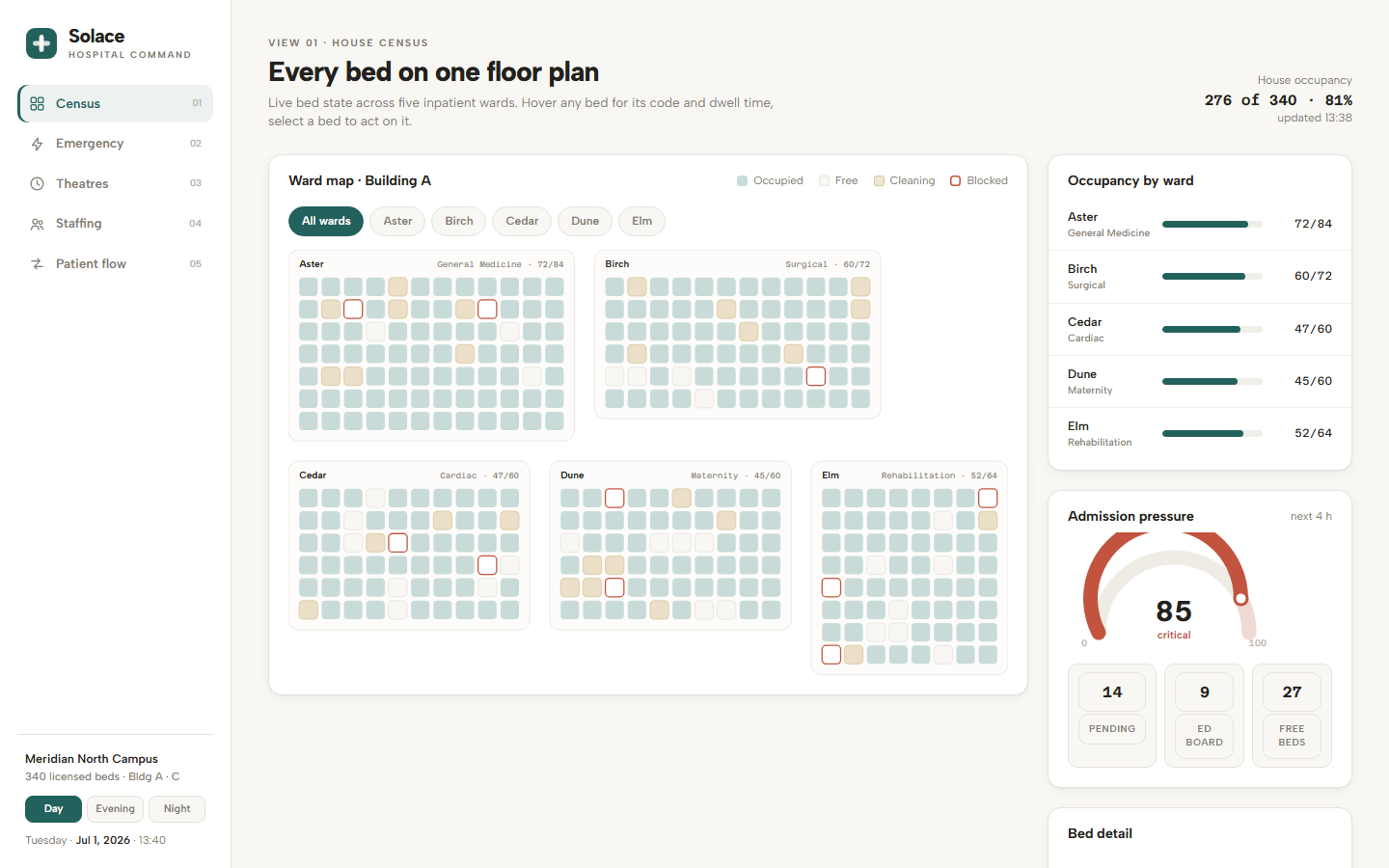
The 2 templates cover hospital scale and clinic scale. Solace is a hospital command center for a 340-bed campus: a live bed map with 4 bed states, an ED panel with a 24-minute median door-to-provider time against a 30-minute target, 6 operating theatres on one 07:00 to 18:00 timeline, and 6 unfilled shifts carrying $9,840 of agency exposure. Pulse Clinic is a family practice front desk: a 6-patient roster with urgency tags, 128 weekly appointments up 6.2%, a 3.1% no-show rate, and a 12-minute average wait.
Compare the health templates
| Template | Domain | Theme | Price |
|---|
| Solace | Healthcare, Hospital ops | Porcelain Teal | $6.99 |
| Pulse Clinic | Healthcare, Scheduling | Clinical | $6.99 |
Who uses these
A healthcare dashboard serves the staff who run the floor: house supervisors, ED medical directors, operating room managers, nursing directors, and practice managers. House supervisors place admissions from the bed map, with 14 pending placements and 9 ED boarders counted on one panel. ED medical directors watch the door-to-provider median and the longest current wait at 2:47 hours to decide when to open fast track. Operating room managers track 21 booked cases and a 28-minute median turnover against target. Nursing directors cover gaps, moving float pool staff toward ratio breaches first. Practice managers report the week's 3 numbers to ownership: 128 appointments, 3.1% no-shows, and a 12-minute average wait.
When to reach for one
A healthcare template is the right choice when the floor status is a spreadsheet census emailed at 07:00 and stale by 08:00. A single HTML file puts beds, ED flow, theatres, staffing, and patient flow on linked views that read the same data. Pick it also when you demo to clinical stakeholders: every panel pairs a real number with its target, door-to-provider against 30 minutes, discharges before noon at 27% against a 33% target, so the screen argues for itself. The templates hold no patient data and send nothing anywhere, so they are safe to show in a waiting room office. The KPI card design guide explains the number-against-target pattern these views use throughout.
Frequently asked questions
What is a healthcare dashboard template?
A healthcare dashboard template is a pre-built HTML page that displays healthcare operations metrics such as bed state, door-to-provider time, theatre schedules, nurse staffing ratios, and discharge blockers. You download one file, replace the sample data with your own, and open it in a browser. No server or database is required.
Do these templates store real patient data?
No, these templates do not store real patient data. The roster patients, visit plans, and drug lists in Pulse Clinic are sample values inside the file, there is no backend, and nothing is sent anywhere. The same holds for Solace: the 340-bed census and ED boarders are fictional, so both files are safe to demo.
Should I pick Solace or Pulse Clinic?
Pick Solace for hospital-scale operations and Pulse Clinic for outpatient scheduling. Solace models a 340-bed campus with an ED, 6 theatres, and nurse staffing across 3 shifts. Pulse Clinic models one family practice: a 6-patient roster with urgency tags, an availability calendar, and weekly volume. Both are single HTML files at $6.99.
Can I change the wards, targets, and fee values?
Yes, you can change the wards, targets, and fee values in a text editor. Wards, bed states, and targets like the 30-minute door-to-provider goal are plain markup and data arrays inside each file. Renaming a ward or editing the $240 visit fee in Pulse Clinic is a text edit, not a rebuild.
 Dashboard
 $6.99
Solace is a single-file HTML dashboard that puts hospital bed state, ED flow, theatre schedules, nurse staffing, and discharge blockers on five linked views.
bed map of Building A across 5 inpatient wards with 4 bed states (occupied, free, cleaning, blocked)ED panel with door to provider median of 24 min against a 30 min target, p90 of 61 min, and left without being seen at 1.8%arrivals by hour bar chart covering 219 arrivals with the 15:00 peak and the current hour marked
Buy now · $6.99Live preview
$6.99
Solace is a single-file HTML dashboard that puts hospital bed state, ED flow, theatre schedules, nurse staffing, and discharge blockers on five linked views.
bed map of Building A across 5 inpatient wards with 4 bed states (occupied, free, cleaning, blocked)ED panel with door to provider median of 24 min against a 30 min target, p90 of 61 min, and left without being seen at 1.8%arrivals by hour bar chart covering 219 arrivals with the 15:00 peak and the current hour marked
Buy now · $6.99Live preview